
Digital Footprint for Software Engineers: Why Writing Good Code Is No Longer Enough
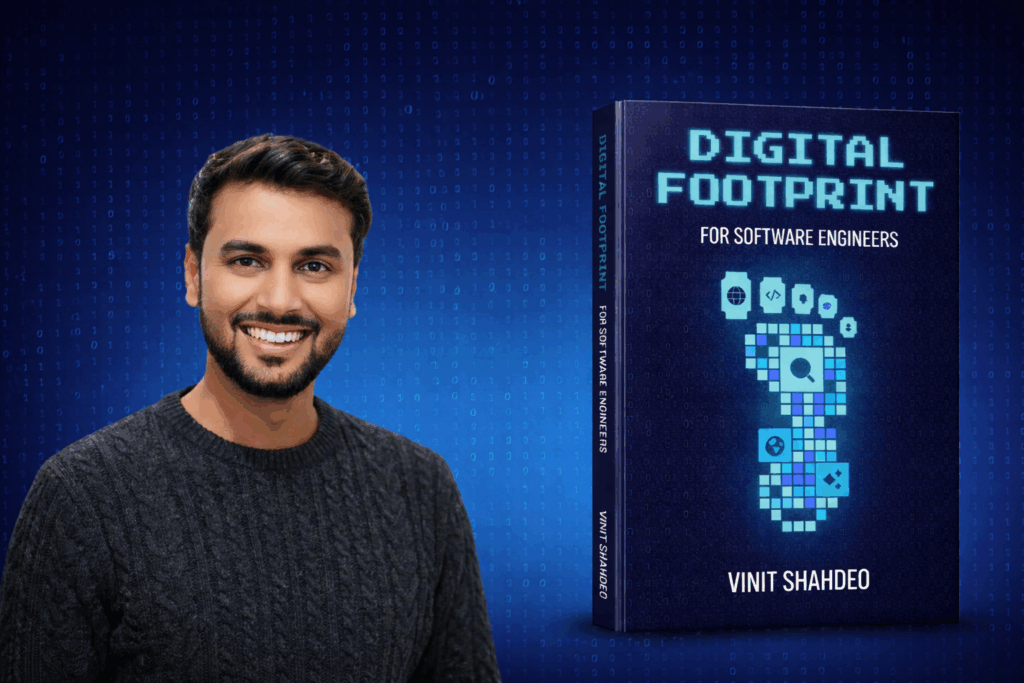
Most software engineers don’t start their journey thinking about careers, visibility, or personal brands.
They start with curiosity.
Curiosity about how computers work behind the scenes.
Curiosity about why the website does not load.
Curiosity about how a few lines of code can power something used by millions.
For years, that curiosity—and competence—was enough. Write good code, ship features, fix bugs, and growth would follow.
But the industry has quietly changed.
Today, thousands of brilliant engineers write excellent code every day—and remain largely invisible outside their immediate teams. Meanwhile, opportunities increasingly flow to those who are discoverable, not just capable.
This is the problem Digital Footprint for Software Engineers sets out to solve.
The Silent Gap Between Skill and Opportunity
If you’ve ever wondered why someone with seemingly similar skills gets:
- More interview calls
- Faster promotions
- Conference speaking invites
- Open-source recognition
…it often comes down to one thing: visibility.
Not loud visibility. Not influencer-style visibility.
But credible, consistent, searchable presence.
Hiring managers Google candidates. Founders skim GitHub profiles. Peers discover blogs shared months ago. Opportunities rarely start with resumes anymore—they start with links.
Like it or not, every engineer already has a digital footprint. The only question is whether it’s intentional or accidental.
What a Digital Footprint Really Means (and What It Doesn’t)
When people hear “digital footprint,” many think of social media clout or viral threads.
This book takes a very different stance.
A digital footprint is the total of how your work, thinking, and impact show up online—across GitHub, blogs, portfolios, documentation, talks, communities, and even search results.
It is:
- Your GitHub repositories and commit history
- The way you explain concepts in blogs or docs
- The clarity of your portfolio
- Your participation in open source or communities
- How easily someone can understand what you actually do
It is not about chasing followers or performing for algorithms.
The strongest digital footprints feel quiet, honest, and deeply human.
Why This Matters More Than Ever
We are living in a remote-first, async-first, search-driven world.
Your future manager might never sit next to you.
Your future collaborator might never see your resume.
Your future opportunity might come from a blog you wrote two years ago.
In such a world, your digital footprint becomes your asynchronous introduction—your way of saying, “This is how I think. This is what I’ve built. This is how I add value.”
And unlike resumes, it doesn’t expire.
What the Book Covers (Practically)
Digital Footprint for Software Engineers is written with a builder’s mindset. It avoids theory-heavy fluff and focuses on real, repeatable actions.
Inside the book, readers learn how to:
- Build a GitHub profile that signals clarity, ownership, and depth
- Write blogs that reflect thinking—not ego or hype
- Create a portfolio that showcases outcomes, not buzzwords
- Use LinkedIn and Twitter/X intentionally without burnout
- Leverage open source, mentoring, and community work
- Stay searchable on Google while protecting privacy and security
- Avoid common mistakes that dilute trust or feel inauthentic
Each chapter is designed to help engineers compound visibility over time, not sprint toward short-term attention.
The Core Philosophy: Visibility Without Vanity
One of the central ideas in the book is simple:
“Write code for machines. Build a footprint for people.” — Vinit Shahdeo
Software engineers already document systems, write RFCs, review pull requests, and explain decisions internally. This book encourages extending that habit outward—just enough for the world to understand your impact.
Done right, visibility is not self-promotion.
It’s context-sharing.
It helps others learn from your work.
It helps teams trust your expertise faster.
It helps opportunities find you—organically.
Who Should Read This Book?
This book is especially relevant for:
- Early-career engineers unsure how to stand out
- Mid-level engineers aiming for growth or better roles
- Senior engineers whose impact isn’t visible outside their org
- Open-source contributors and community builders
- Engineers preparing for job switches, promotions, or public roles
Whether you work at a startup, a large tech company, or are building independently, your digital footprint follows you everywhere.
Long-Term Leverage, Not Short-Term Noise
One of the strongest messages in the book is patience.
A meaningful digital footprint is built slowly:
- One repository at a time
- One article at a time
- One contribution at a time
There are no hacks—only habits.
But over months and years, these small actions create leverage that compounds quietly. People start recognizing your name. Your work starts circulating without you pushing it. Trust builds before conversations even begin.
That is real career leverage.
About the Author
Vinit Shahdeo is a software engineer, open-source contributor, and mentor who has spent years building and scaling backend systems across startups and tech companies, while actively contributing to developer communities.
Through workshops, mentoring, open-source programs, and hands-on engineering work, Vinit observed a consistent pattern: many highly skilled engineers struggled with visibility, not capability. Promotions, opportunities, and recognition often depended on how well one’s work was understood beyond immediate teams.
Digital Footprint for Software Engineers is born from that realization.
The book combines an engineer’s mindset with practical career frameworks, helping developers showcase their work authentically—without turning their careers into marketing exercises. Vinit believes that when done right, visibility is not vanity, but a form of professional responsibility.
Learn more about Vinit.
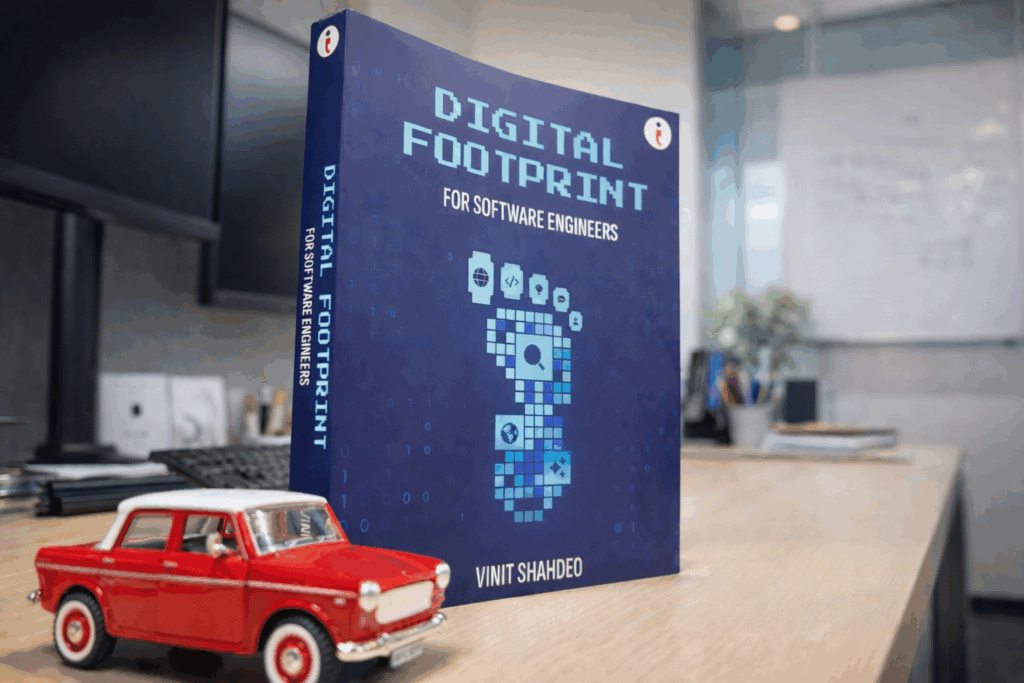
Availability
Digital Footprint for Software Engineers is now available on Amazon, making it accessible to readers across India and globally.
Whether you are just starting out or are a seasoned engineer looking to build long-term career leverage, the book serves as a practical guide for navigating visibility in a digital-first tech ecosystem.
Buy on Amazon: https://amzn.in/d/cSNyCNl
Read author note: https://vinitshahdeo.substack.com/p/digital-footprint-for-software-engineers
Final Thought
You don’t need to be loud.
You don’t need to be everywhere.
You don’t need to be famous.
You just need to be discoverable, credible, and intentional.
Your story already exists online.
This book helps you tell it; clearly, honestly, and on your own terms.