
Creating Pairoma: The Story Behind Himanshu Gupta’s First Game
In this interview, we feature Himanshu Gupta, a Senior Engineering Manager and founder of Adroma Games. With over 15 years of experience in software engineering, Himanshu turned his passion for technology and puzzles into Pairoma, a number-based mobile puzzle game. He shares his journey of building the game, the challenges of launching it independently, his future plans for Adroma Games, and valuable advice for aspiring entrepreneurs and developers.
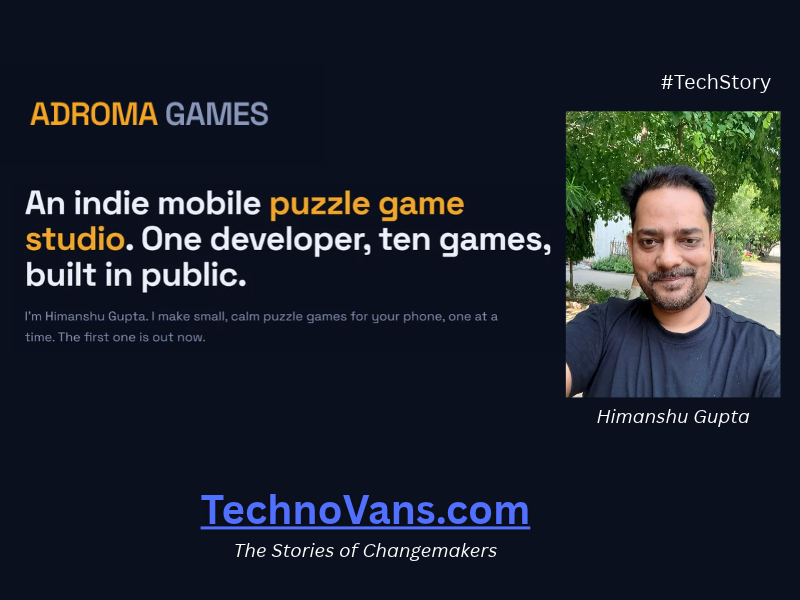
Interview with Himanshu Gupta, Founder of Adroma Games
Please tell us about yourself
I’m Himanshu Gupta, a Senior Engineering Manager based in Noida, Uttar Pradesh, India. I completed my B.E. from Panjab University and have spent over 15 years building backend systems using Java, Spring Boot and AWS, primarily across the insurance, retail and logistics industries.
Currently, I work at Gigaforce in Noida, where I look after technical architecture and lead a team of engineers.
Outside my day job, I enjoy building things and exploring new ideas. Adroma Games is one such venture, my attempt to turn my interest in technology and gaming into something of my own. I genuinely enjoy creating products, and games are probably one of the most fun ways I’ve found to do that.
Please tell us about the game you developed called Pairoma
Pairoma is a number puzzle game and the first game we launched under Adroma Games.
The idea is pretty simple: players have to identify and match pairs of numbers on the board using basic number patterns and logic. The goal is to clear the board and progress through increasingly challenging levels.
I built Pairoma using Flutter for both Android and iOS. I wanted to create something simple that anyone could pick up during a short break, play for a few minutes and give their brain a little workout.
It’s easy to understand but gets challenging as you progress. We’ve also added features like daily challenges, streaks and offline play to keep the experience engaging.
For me, Pairoma is also the first step in building Adroma Games and exploring how we can create simple, enjoyable mobile games that people keep coming back to.
How did you come up with this idea? And how much effort have you taken to implement it?
I’ve always loved solving puzzles, especially Sudoku, crosswords and number-based games. There’s something relaxing yet exciting about them. You can take a break from everything else, focus on the puzzle and enjoy the little satisfaction of solving it.
I’ve also always wanted to build a game of my own. So I thought, why not start with something simple that I personally enjoy playing?
That’s how Pairoma started. I wanted to create a clean, distraction-free puzzle game without unnecessary pop-ups or too much noise. Something people can pick up anytime, enjoy at their own pace and come back to whenever they feel like it.
In terms of effort, it took quite a bit more than just writing code. I worked on the game mechanics, UI/UX, different levels, difficulty balancing, testing and making sure the experience felt right on both Android and iOS. I handled the development myself using Flutter.
It’s my first game under Adroma Games, and honestly, there’s been a lot of learning along the way. I wanted to start small, build something real, learn from the experience and take it forward from there.
What were the problems/challenges you faced up to this date? How did you overcome them?
I would say there have been three major challenges so far.
First, managing time. I have a full-time job, responsibilities at work and other things I’m building alongside it. Finding dedicated time for game development wasn’t easy. I started breaking things into smaller tasks and working on them whenever I could. The idea was to make some progress every day rather than wait for a perfect block of time.
Second, the publishing process. I’m primarily a backend engineer, so things like Play Store publishing, app screenshots, store listings, ASO and app store guidelines were quite new to me. I had to learn most of it along the way. There were mistakes, a few roadblocks and plenty of trial and error, but that’s part of building something on your own.
Third, and probably the biggest challenge right now, is marketing. Building a game is one thing, but getting people to discover it, download it and keep playing is a completely different challenge. I’m still figuring this out. I’ve started engaging with communities and sharing updates on X, Reddit and other platforms.
I think the biggest learning so far is that building the product is only one part of the journey. Distribution, marketing and user retention need just as much attention. And I’m learning all of that hands-on.
Tell us about an achievement you are most proud of
Shipping Pairoma is definitely the achievement I’m most proud of. A lot of people have game ideas, but taking one from an idea to a live product on the Play Store is a completely different experience.
I built it while managing a full-time job and other ventures, so getting it across the finish line feels special.
Another thing that made me really happy was the response during closed testing. Almost 80% of the feedback was positive, while the remaining 20% was constructive feedback on things we could improve. What I found encouraging was that nobody said the game was boring or bad. People were actually sharing suggestions to make it better.
For me, that’s a big win. It gave me confidence that the basic idea has potential and that we’re moving in the right direction.
More than anything, I’m proud that I didn’t just keep the idea on paper. I built it, put it out there, got real users to try it and started learning from them. That’s what makes this achievement special for me.
Are there any other games you are planning to develop and launch?
Yes, definitely! I see Adroma Games growing into a collection of simple, engaging mobile and browser-based puzzle games.
The next game I’m working on is Word Fall, which is a different take on traditional crossword puzzles. I want to bring something fresh to the word puzzle space while keeping the experience simple and enjoyable.
Beyond that, I have plans to explore more small brain games around numbers, words and logic.
I don’t want to rush into building too many games at once. My approach is to build one game, learn from real users, improve it and then move on to the next one.
Hopefully, over time, Adroma Games will become a place where people can find a good little puzzle whenever they want to take a break.
What are the future goals of Pairoma?
My first goal is to keep improving Pairoma based on actual player feedback. I want to introduce more difficulty levels so that beginners can enjoy it without feeling overwhelmed, while people who love challenging puzzles always have something to look forward to.
We already have features like daily challenges, streaks and offline play, and I’d like to build further on these with things like leaderboards and more ways to keep players engaged.
I also want to understand player behaviour better, see where people are enjoying the game and where they’re getting stuck, and use those insights to improve the overall experience.
In the long run, I want Pairoma to become a go-to game for anyone looking for a quick brain workout. Something they can play during a break, relax with and make part of their daily routine.
But my immediate focus is simple: build a better game, listen to users and grow the player community organically.
What are your motivational words for our audience?
My advice would be simple: don’t wait for the perfect time or the perfect plan. Just start.
Even one hour a day can make a difference if you’re consistent. Pick a small idea, build the first version and get it out there. It doesn’t have to be perfect.
You’ll make mistakes, face challenges and probably realise there are a hundred things you could have done better. That’s completely fine. Launch it, get feedback from real users and keep improving.
One thing I’ve realised while building Pairoma is that having an idea is easy, but executing it consistently is what really matters.
You don’t have to be the most talented person in the room. You just have to be willing to start, learn and keep going.


